Have you got any early memories of being interested in writing as a form of self-expression?
Yes, I actually was interested in writing since I was a young child but creative writing isn’t a big thing in schools in Honduras. I would write essays for school and I would have readings, specific readings, as part of our school work but that almost turned me off literature. Often the teachers would pick books for us to read, but they wouldn’t be appropriate for your age.
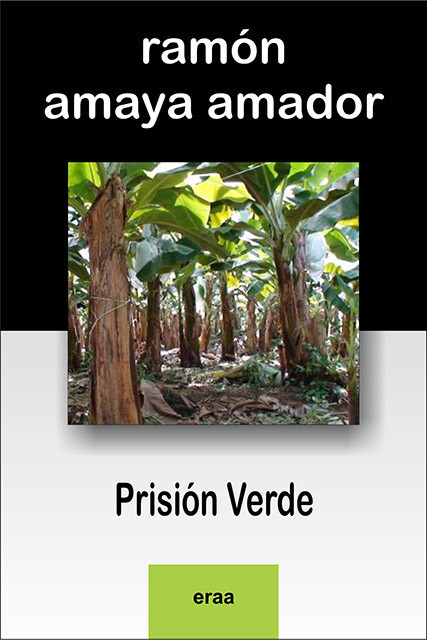
I was given a book to read, “Prisión verde”, in English that would be, “Green Prison”, in 4th Grade. It was a novel by Honduran author, Ramón Amaya Amador, and it was about exploitation on banana plantations, and it was all about labour rights, and the 8 hour day and things like that. These are things which are very important, but I was just too young for that book, and it really did make me not want to read much after that.
Did you get any support at home?
At the beginning my family didn’t really know I liked reading or writing because I didn’t really go near books after what had happened at school. It wasn’t until I was in 5th grade and my mother started working in a private school as a secretary that things changed.
When we would get out from our school, my siblings and I would go around and play at my mum’s school. Now I was not the kind of kid that would interact naturally with other kids. I was not very social and the director, the Principal, of the school noticed that and he also noticed that I was always in his office. So he gave me access to his library which was full of kids’ books, like The Little Prince, and those kind of readings that were more appropriate for my age. That’s when I really started enjoying reading.
What happens then?
My mum noticed that I liked reading books so she would get me second hand books from vendors on the streets, because we did not have very much money to be using it to buy books from bookstores.
She would go out on the streets to the markets, and she would find, quite randomly, books and she didn’t even know what those books were or if I would like them. But that is how she began supporting my reading and because of that I eventually started writing.
So around what age did you start writing?
The first time I wrote something of my own was when I was 15 or 16 years old. I had an idea that I wanted to write a novel and of course, that didn’t work out so well because I was just a child, at least I never finished it.
It was something that came out just because of the fun of it, to be honest, I was not thinking I’m going to become a writer and this will be my life. I just thought I want to write this story that I just imagined, and I have a computer, so why not?
I was trying to write about death and the act of losing someone. I was looking at the situation where people can struggle with losing someone. I created a main character, an orphan girl who could see ghosts. And those ghosts were in limbo because they could not fulfil their last wishes. They were too attached to their memories and they didn’t want to lose those memories so they were unable to move on.
In some ways I wasn’t really talking about death, I was talking more about a period in between death and something else, and how the ghosts felt they were losing their lives and their memories. And I just couldn’t work out how to end the novel.
The little girl who could see ghosts had a sidekick, a child who had died, and he was too attached to the memories he had in life. And she was trying to help him fulfil his last wishes so he could pass to the other side in some kind of way and that was the key theme of the novel. But as I said, I just couldn’t work out how to finish it.
Do you go on to do anything at college or university in terms of literature and writing?
I did have the intention to study literature at university but I actually ended up choosing another career instead. I chose to become an industrial engineer. This was an economic decision,
My mum was sick back then, and I was thinking about the future. I was thinking about the stability of my income, things like that, because I wanted to be able to take care of her. My mum needed certain medical treatment given to her and I thought if I worked as an engineer, I would have economic stability and I would be able to look after her. I studied in that course for around four years.
Sadly, my mum passed away and I had a whole existential crisis about do I want to keep going with this career? I asked myself a lot of questions. Do I want to graduate from this career? Is this what I want? And I just came to the conclusion that I didn’t want to be an industrial engineer. And despite the fact that I was very advanced, I threw everything away, and changed my major to literature and linguistics. That was in 2020.


