Gordon Hewitt (The Monthly) – Andrea Duke – (Artist)
Dayani Flores (Translator) – Gabri Gomez (Translator/Editor)
The Monthly wishes to thank Dayani Flores and Gabri Gomez for all their work in providing translations of the conversion between Gordon Hewitt from The Monthly and the El Salvadoran artist, Andrea Duke
………………….
Do you have any early memories of being interested in the arts or using art as a form of self-expression?
From a very young age, I was fascinated by anything related to drawing. To give you an idea, I was the kind of child who always made sure the covers of my notebooks were neatly done—beautiful and carefully illustrated—because it was something that truly captured my attention and that I genuinely enjoyed. Even though I probably didn’t have the exposure to know that studying art was an option, it was something I loved deeply from early on.
¿Tenés algún recuerdo de haberte interesado por el arte en tu niñez o de usar el arte como forma de expresión?
Desde muy pequeña me fascinó todo lo que tenía que ver con el dibujo. Para que te hagas una idea, yo era esa niña que siempre llevaba las portadas de mis libretas bien hechas, bien bonitas, bien dibujadas, porque fue algo que siempre me llamó la atención, siempre me gustó. Aunque probablemente no tenía el acceso saber que podía estudiar arte, sí que fue algo que me gustó un montón desde bien pequeña.
Did you get support at home for your love of art?
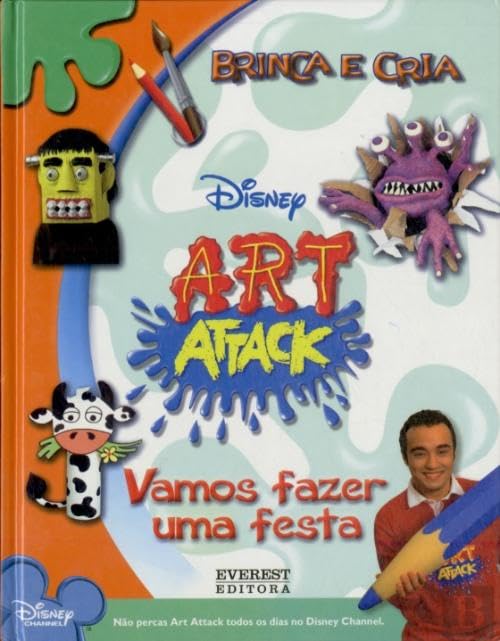
I didn’t have direct support as such. That said, something I do remember—and wanted to bring up earlier—is a very popular TV show called Art Attack that explored many different aspects of artistic expression beyond just drawing, which I found truly fantastic.
¿Tuviste algún tipo de apoyo en casa para tu interés por el arte?
No tuve un apoyo como tal. Dicho esto, lo que sí recuerdo y que quería añadir antes, es un programa de televisión muy famoso que se llamaba Art Attach, donde trabajan muchas facetas de la exploración artística que no sólo tenían que ver con el dibujo, y eso era fantástico.
Did you get any support at school?
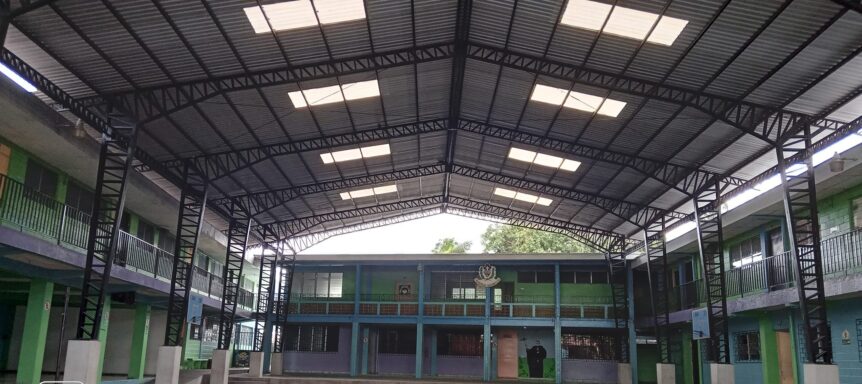
I’d say that around fifth grade, when I enrolled in a Catholic school called Divina Providencia, was the moment when I first came into contact with a more defined focus on artistic exploration, particularly through the Art class. There, we had the opportunity to paint, draw, and experiment with different forms of artistic expression. I feel that in that environment there was more structured support, because in addition to visual arts, we also had other disciplines such as music. For me, being so young, it was a very enriching experience. However, I don’t recall any specific person who particularly encouraged that interest.
¿Recibiste algún tipo de apoyo en la escuela?
Diría que cuando, entorno a quinto grado, ingresé a un colegio católico llamado Divina Providencia, fue el momento en el que entré en contacto con un enfoque más marcado en la exploración artística, especialmente en la asignatura de Artes Plásticas. Allí sí teníamos la oportunidad de pintar, dibujar y experimentar con distintas formas de expresión artística. Considero que en ese entorno sí existía un apoyo más definido, porque además de las artes visuales, también contábamos con otras disciplinas como música. Para mí, siendo tan pequeña, fue una experiencia muy enriquecedora. Sin embargo, no tengo un recuerdo específico de alguna persona en particular que haya impulsado ese interés.
How did you develop your skills in art?
It is very clear to me that I have always wanted to be an artist. Although my academic path led me to study a Master’s Degree in finance—which became my main source of income—being an artist is something I dreamed of since I was a child. However, in my country it is a major challenge to make a living from art. I’m not aware how it is in other places, but where I live art is often seen not as a productive activity, but rather as a hobby.
Consequently, it has been essential for me to seek out tools and opportunities that could consolidate and strengthen my artistic practice. Over the years, I’ve taken part in diploma programs, workshops, and artist residencies that have contributed immensely and have been key to my development as an artist.
¿Cómo desarrollaste tus habilidades artísticas?
Siempre quise ser artista. Aunque mi rumbo universitario me llevase a estudiar una maestría en finanzas, que es lo que hoy en día me sostiene económicamente, ser artista fue lo que soñé desde pequeña. No obstante, en nuestro país es complejo vivir del arte. Desconozco como es la situación en otros países pero donde yo vivo dedicarse al arte no se ve como una actividad productiva, sino más bien como un hobby. Por eso, para mí ha sido fundamental buscar herramientas que consolidaran y fortalecieran mi práctica artística. De esta manera he participado en diplomados, talleres y residencias artísticas que me han aportado muchísimo y han sido clave en mi formación como artista
Did you go on to study art at college or university?
As soon as I finished high school, the first thing I did was sign up for an Art Degree at the University of El Salvador. However, due to the economic situation we were going through and the consequent need for a stable job, I had to leave the program. Since I was good at maths, I decided to pursue a career in a field related to that area, while continuing to take courses and workshops that were connected to my artistic practice
¿Estudiaste arte en una institución de educación superior o universidad?
En cuanto acabé el colegio lo primero que hice fue matricularme en una carrera artística en la Universidad de El Salvador, pero debido a la situación económica que atravesábamos y a la consecuente necesidad de un trabajo estable, tuve que abandonarla. Como se me daban bien las matemáticas decidí estudiar algo que estuviera vinculado con ese campo, mientras continuaba realizando cursos y talleres relacionados con mi práctica artística.
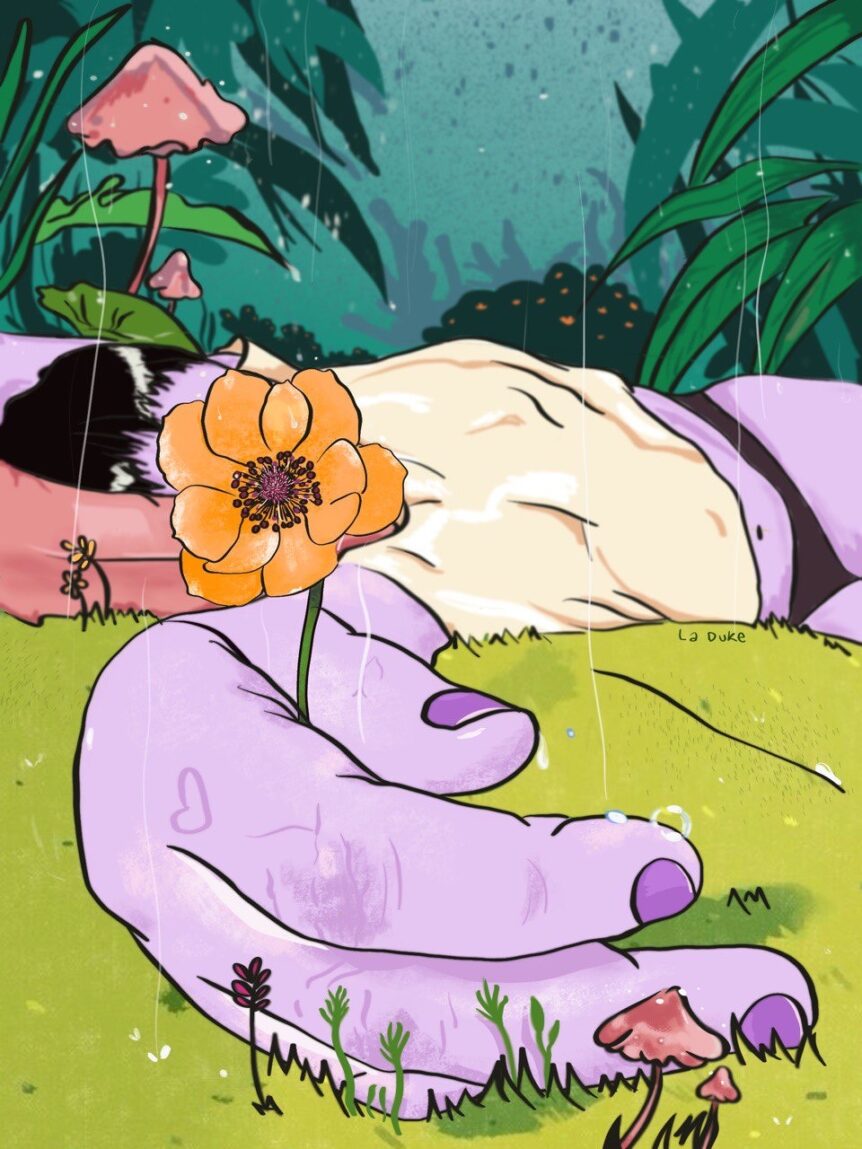
To see more of Andrea Duke’s work go to the link below


