Our own folk music sustained and developed as part of an oral tradition that included many regional variations of form and presentation. During the lifetime of Turlough O’Carolan (1670 -1738), one of its most celebrated composers, only a small number of his wonderful 214 harp tunes were actually published, or even written down. His son John published some upon his death and Edward Bunting would annotate more of his work in the wake of the Assembly Rooms harper gatherings of 1792.
Irish musicologist Donal O’Sullivan presented two brilliantly researched volumes of O’Carolan’s music in 1958 and this would inspire the great Seán Ó Riada who released Carolan’s Concerto in 1967. Following this many artists have gone on to record versions of O’Carolan tunes. Ó Riada has of course been primarily responsible for the emergence of Irish Traditional music onto the world stage. He beautifully orchestrated the music and restructured its form, bringing the pipes to its centre and using the frame drum (bodhrán). The ‘group’ presentation of Irish Traditional music has flourished and achieved status on the world stage, yet despite its added complexity and individualisation, fiddle music has remained within folk boundaries.
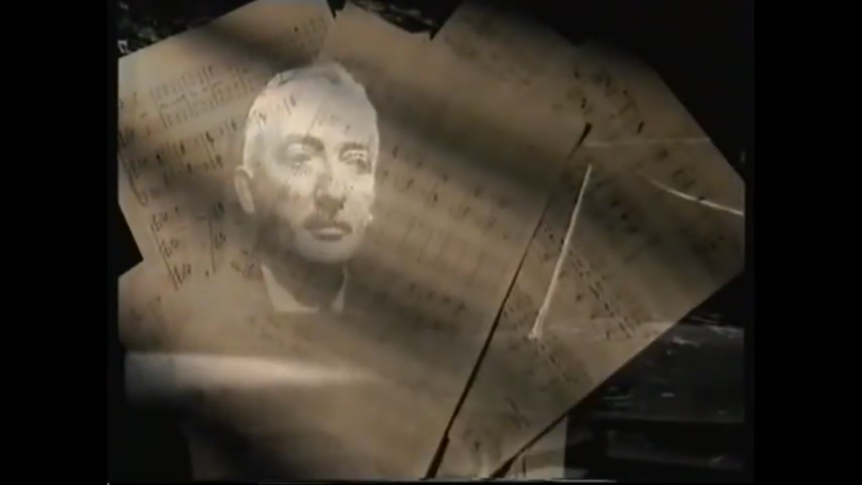
Léargas: Faoi Sholas an Riadaigh (Seán Ó Riada)
www.youtube.com/watch?v=hoIwCLYunzU
Christian religious music dates back to the earliest centuries post Christ, but the Reformation brought praise through song to the very centre of Christian service. In the new America there were many prolific composers of new hymns, but it took to 1919 before Lucie Campbell composed the first African American hymn with Something Within. The conversion of African Slaves to Christianity brought about a very special fusion between the oral tradition of Black Work and Slave songs and the (updated) European style of hymns. Gospel music based upon Call and Return lyrics was a powerful draw at Christian camp events from the mid-1800s.
Through a combination of new technology (both for recording and playing discs) and the foresight of a small number of pioneers, important source material was recorded for the new Race Labels of the 1920s and early 1930s. It is fair to describe the music of such artists as Charley Patton, Blind Willie Johnson, Willie McTell, Washington Phillips and Robert Johnson as important architecture. Some artists would sing pure Gospel, many others would pay homage to Gospel alongside other material.
Often performed by a solitary musician, or in a small ensemble, vocals were accompanied by virtuoso guitar or piano playing. It is this small and intimate scale that most appealed to me. I feel that the music of Blind Willie Johnson and Fred McDowell’s later collaboration with The Hunter’s Chapel Singers represent Blues and Gospel at its very best.
Tommy Dorsey began his recording career in 1927 and he would go on to define the genre of Gospel Choir music with a big band feel that is recognisable today. Electric Chicago Blues would also grow from this music as artists left the plantations and migrated to the cities and as new technologies allowed better amplification of sound. The early Blues/Gospel was lost as it mutated into Rock & Roll, R&B and Rock.
A number of factors contributed to a rebirth of Blues/Gospel. The Civil Rights movement reintroduced some of the surviving players to the growing folk scene and former New York Times columnist James McKune inspired fellow enthusiasts to reissue selections from the old 78RPM catalogues. This contributed to a journey of many contradictions, one of the most significant being that young British musicians of the early 1960s looking for authenticity, would plough some of this reissued source material and reintroduce it back to the Americans. British Blues orientated bands even shone a light at some of their surviving heroes that younger generations of Americans barely knew of.
Popular music changes and evolves with each new generation and frequently artists look to the past for inspiration. There have been wonderful electric Blues players and it is evident that music today has not left the Blues behind. However, in the form in which it is practiced live, even at dedicated Blues Festivals, I see little evidence of its original potency and verve. Trad sessions today are generally of a very high order, but that wasn’t always the case. Hopefully roots Blues/Gospel can find more artists and audiences beyond the confines of the generic and unimaginative British blues format where it sits today.


