You move towards community arts early on?
When I was working at Queens Street Studios I would sell a piece of work here and there. I would do shows, I would apply for grants, pretty much all the things you are supposed to do. But I found that didn’t really satisfy me. I felt like you were on a Hamster Wheel, where you were just doing one thing after another, getting a grant, painting, putting on an exhibition and back to the beginning again.
Why was that approach not satisfying?
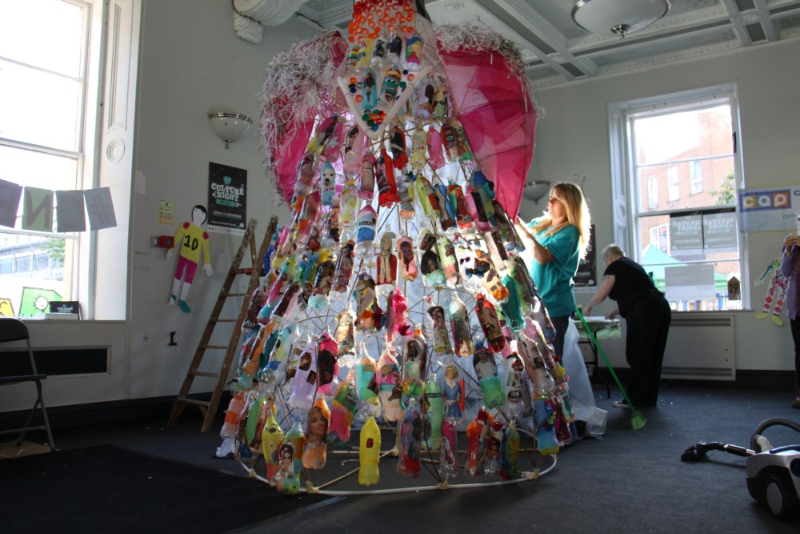
I felt that it was hard to justify what you were doing because going that route, it was very hard to make money. I needed to make enough money to pay rent and so I started to work with the Old Museum Arts Centre with different community groups, and I started taking classes, and I just went on from there. Eventually I worked with the Belfast City Council, other organisations, and things like that.
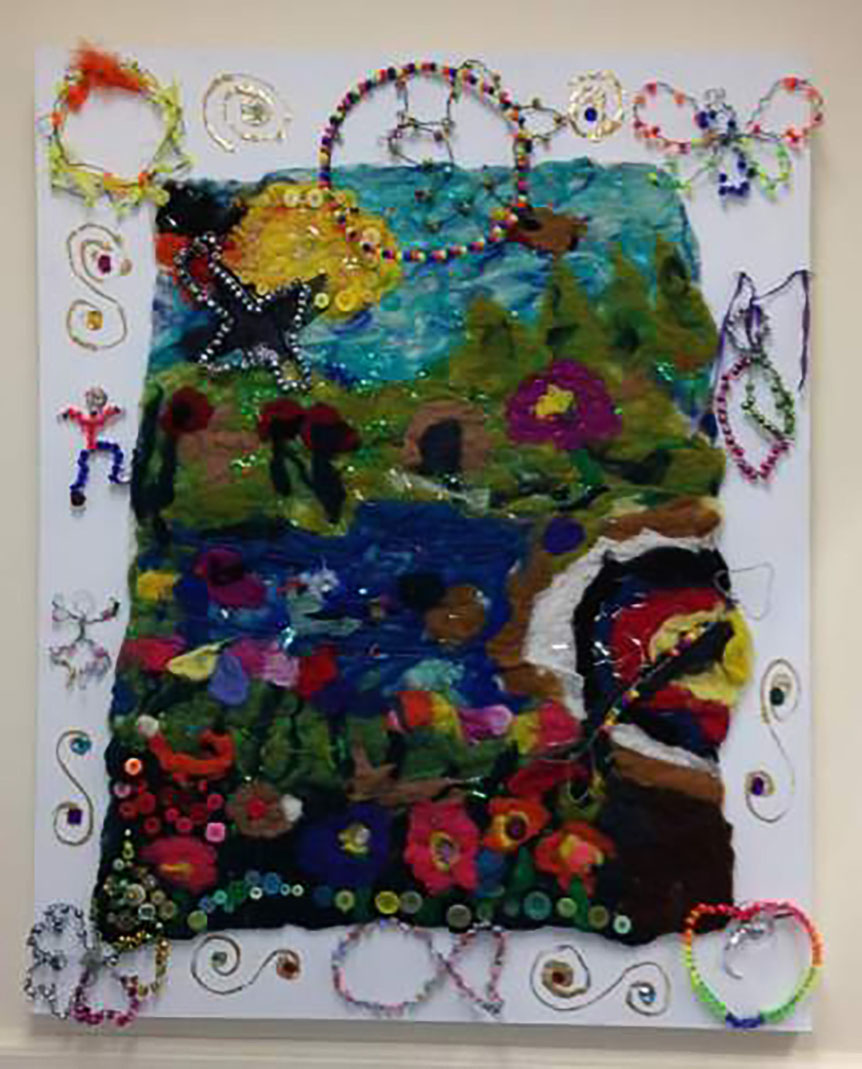
And because I was making money through Community Arts I could still work on my own art. I didn’t have to worry about if what I was producing was sellable or would fit into any particular market, so everything worked out well and I have always enjoyed working that way.
Community Arts has quite a rich theoretical background. Would you have a deeply theoretical approach or would you be more practise based?
I am much more practise based. I appreciate the importance of theory and I can see how the theory backs up the work which is done on the ground. For me it always matters that you work on the ground. There has to be a connection between the two, theory and practise.
To give you an example, I was working in the New Lodge once and I was working with young people while there was a meeting discussing theory next door. It was a high brow meeting where they were discussing the theory, but I was the one doing the work and had hands-on experience while there was, in my view, too many people talking who really didn’t have a lot of experience on the ground.
I would add here that the people in that meeting also brought their kids to take part in my classes. I felt like a babysitter rather than an artist.
What do you think is a better approach?
I think you have to be very careful not to build a hierarchy of theorists who tell the artists on the ground how things should be done. You need a fusion of theory and practise but you also need to be sensitive to the work of the community artists. We need both but there has to be a connection between the two. I think Community Arts Partnership gets the balance right, which is why I have always enjoyed working with CAP.