What is the definition of Immersive Art?
‘Immersive’ has become a quite a meaningless term now because it is used in so many different contexts. We really need to contextualise it, in which case as we are discussing it in relation to theatre, I am defining it, for our purposes, as a performance in a 360° environment that employs digitally generated visuals and sound to enhance the performance.
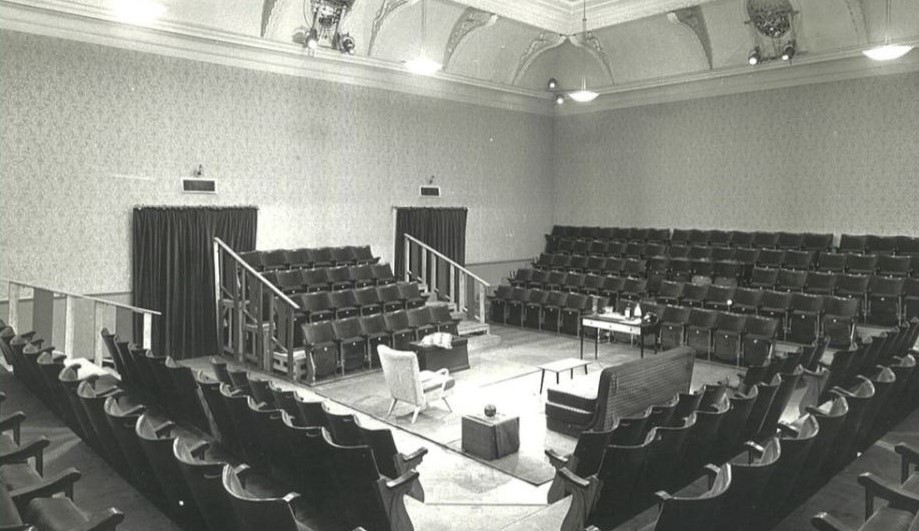
My early influences come from seeing a performance at the Library Theatre in Scarborough, England in 1957, with the audience on four sides of the central acting area. In that configuration we shared a space with the actors and other members of the audience, rather than looking up to them as gods in a proscenium, or down in an amphitheatre. To me that is the most democratic form of theatre and one in which we are more intimately engaged with the action.
I can elaborate on this, but most importantly I need to refer to Stephen Joseph, who was responsible for creating the first professional ‘Theatre-in-the-Round’ in the UK, and who later became my mentor.
Tell us a little about Stephen Joseph?
When Stephen first started ‘Theatre-in-the-Round’, in 1955, he was vilified by the entire theatre profession. People like (Sir) Lawrence Olivier argued that it was impossible to perform with the back to the audience. That’s clearly nonsense. We engage with people who are not directly facing us every day and easily understand what they are saying, and now there are many theatre productions where the actors and audience move in many different juxtapositions. In theatres with the audience surrounding the action, there is the added benefit of being able to see the reactions of the audience members facing you.
“Theatre in the Round” is very important to you. Why is that?
As I said, ‘Theatre-in-the-Round’, is a very democratic form of theatre and I believe it is a way that you can most seriously engage with the action. I see immersive art, or more properly ‘immersive theatre’, using advanced digital technology, as a logical extension.
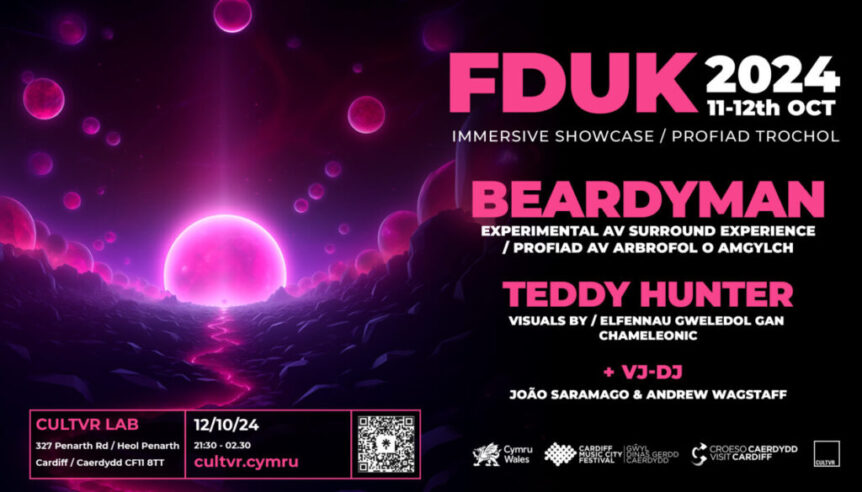
What really triggered my interest in ‘immersive art’ was going to the FullDome Festival in Cardiff in 2024 and meeting people from all over the world who were working in these environments. They were mainly working with film; projecting images onto 360° domes, which has a particular type of impact, at times, really powerful, dare I say even spiritual?
Could you tell us more about the Dome?
What is important to realise about Geodesic Domes is that they are mainly built using Harmonic Proportion, which is inherent in every area of nature. Harmonic Proportion has been used in the great Gothic buildings, in the great cathedrals, in the great architecture of our world.
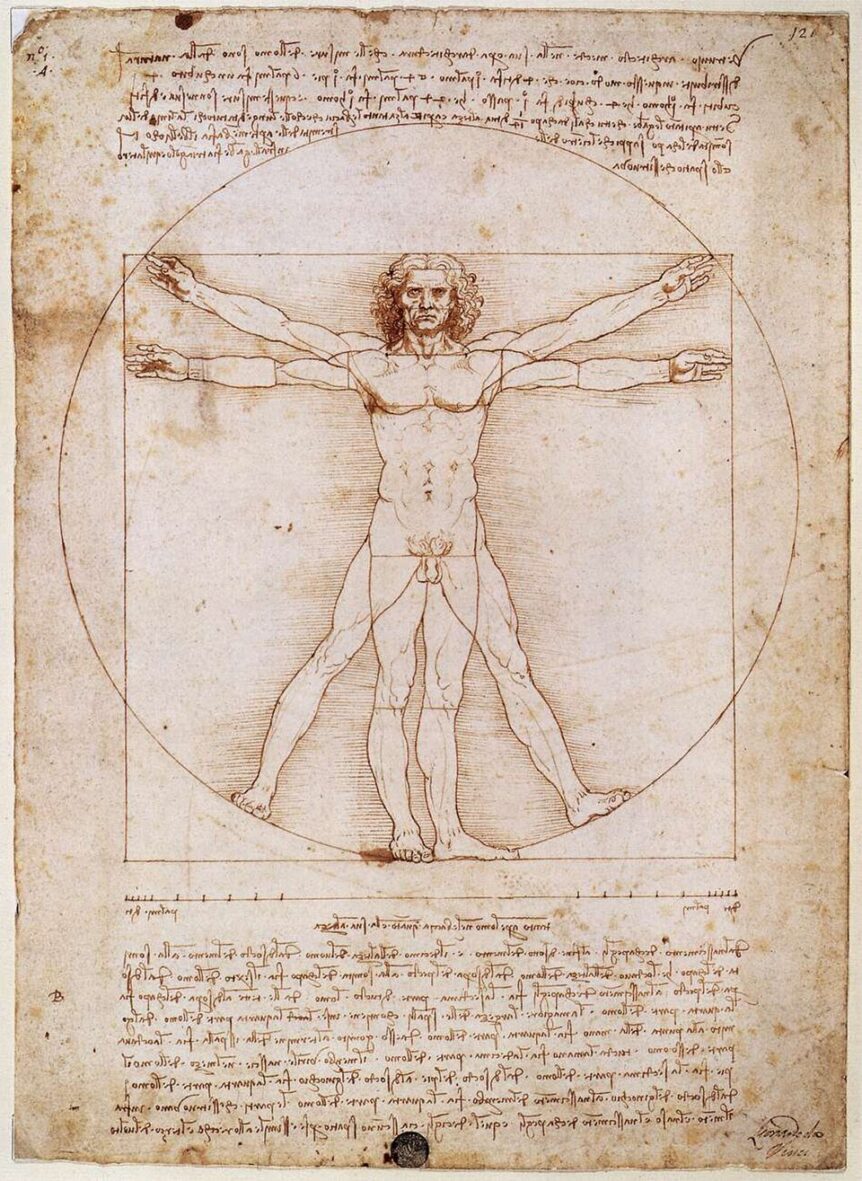
If you remember Leonardo da Vinci’s Vitruvian Man, which demonstrates the ideal proportions of the body. That is based on the same principle. And because the Dome uses this principle, this seems to have an effect of making people, once they are inside the Dome, much calmer, much more relaxed and therefore much more receptive.
While there needs to be more research on this concept, there is plenty of anecdotal evidence that this form of architecture has the potential for some form of healing as well.
And you want to create a performance for Dome environments?
Yes, I am interested in that type of environment because I want to bring theatre into that space. I want to experiment with performances in that environment, and I am hoping to do so in October in Cardiff at the next FullDome (FDUK 2026) festival.
Unfortunately, there are very few domes that have a flat floor which would be suitable for ‘Immersive Theatre in the Round’. To my knowledge in the UK there is only the one in Cardiff at CULTVR and the one at the Market Hall in Plymouth.
Sadly, I’ve recently heard that the new dome that is envisaged at Armagh Planetarium will now not be built with a flat floor and moveable seating, which I think is a huge mistake, severely limiting its potential as a multipurpose facility.
My ambition is to design and build a fully integrated, technologically advanced, portable dome that blends spatial audio, lighting, visuals, and interaction design to create truly responsive live experiences. But that requires substantial investment and I haven’t yet found a funder, backer or philanthropist!
I have been investigating this type of approach for many years now, but most intensely over the last three years and especially so in the last 18 months with “Lucia Dances”. It is through intensive research, investigation and development that we have approached the question: “Does this approach enhance the theatre experience, or does it detract from it?”
If you would like to see more of Alistair Livingstone’s work go to the following links


