You worked as a film-maker?
I spent nearly four decades working as a film-maker, producing and directing. You learn to be ruthless and unsentimental when you are editing. I always worked with a professional film editor. Because the work is for broadcast, you always have another creative person working there with you, challenging your choices.
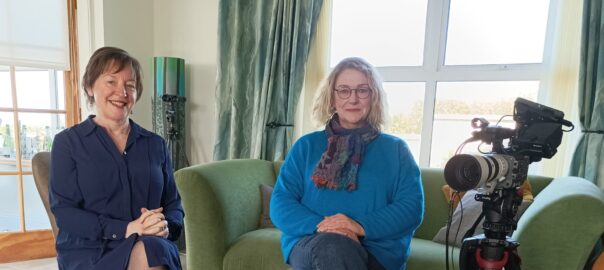
So I have had a great deal of experience of collaborative work and I think that is why when I wrote my first poetry collection, “Sanctuary: there must be somewhere” (Seren Books) I chose to do that, partly, collaboratively.
I think it is reasonable to say that my working life influenced, in some important ways, my approach to my writing.
Are there any poets who influenced your work?
My teenage years were spent in Belfast in the 70s during, “The Troubles”. I was very influenced by those poets who were writing about “The Troubles” as they were happening.
The English teacher I mentioned earlier was very involved with people who were at Queen’s University, especially the poets. I thought it was quite normal to be taken to Queen’s to meet poets like Seamus Heaney, Paul Muldoon or Padraig Fiacc. I’m not sure many teachers did that.
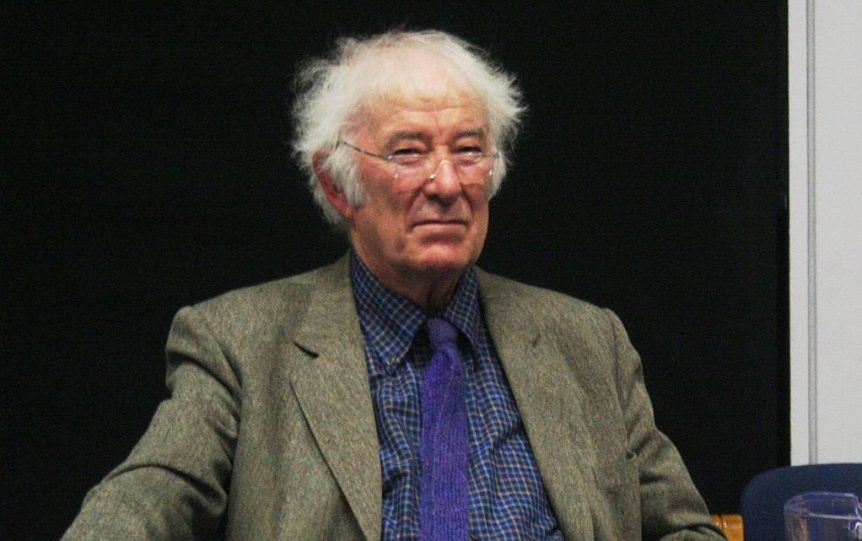
It was never said explicitly but we young people were connected to a creative process which was going on around us. It was made normal to hear poets expressing work about our daily life.
Through broadcast media, television and radio, I encountered journalistic coverage, sometimes through working journalists or through hearing poets, real life being presented to us. Poets like Seamus Heaney offered us reflective elements, deepening our experience, and he was also able to make the utterance beautiful no matter how awful the situation he was writing about might be. So those poets writing in the 1970s were highly influential on my work, and Irish poets continue to influence me.
I also went to live in Wales, I learned to speak Welsh and so Welsh poets also influence my work. Menna Elfyn and R.S. Thomas, for example. I have also been influenced by poets who write in Welsh and English. The practice of moving between languages within a poem, or between poems, is something that seems very natural and normal to me.
Would there be any consistent themes or idea that you investigate through your work?
Probably conflict. I think conflict and how to bring conflict to a peaceful conclusion would be key themes for me.
I found when I had finished the collection – “Exposure: war, media, democracy” – that I had tried to reach out of my own life and reach in to someone else’s life, into the lives of some other people. At least that was very evident to me that I had tried to do that.
Given that I had worked as a documentary maker, I had a lot of experience of helping other people express themselves through the medium of film – trying to help people express themselves is another theme which appears throughout my poems.
In the collection there is a set of poems which are explicitly about inhabiting someone else and speaking “as” them but allowing my imagination to affect what is expressed. In these poems I speak in the persona of someone encountered through journalism, speaking “them” but also me in them.
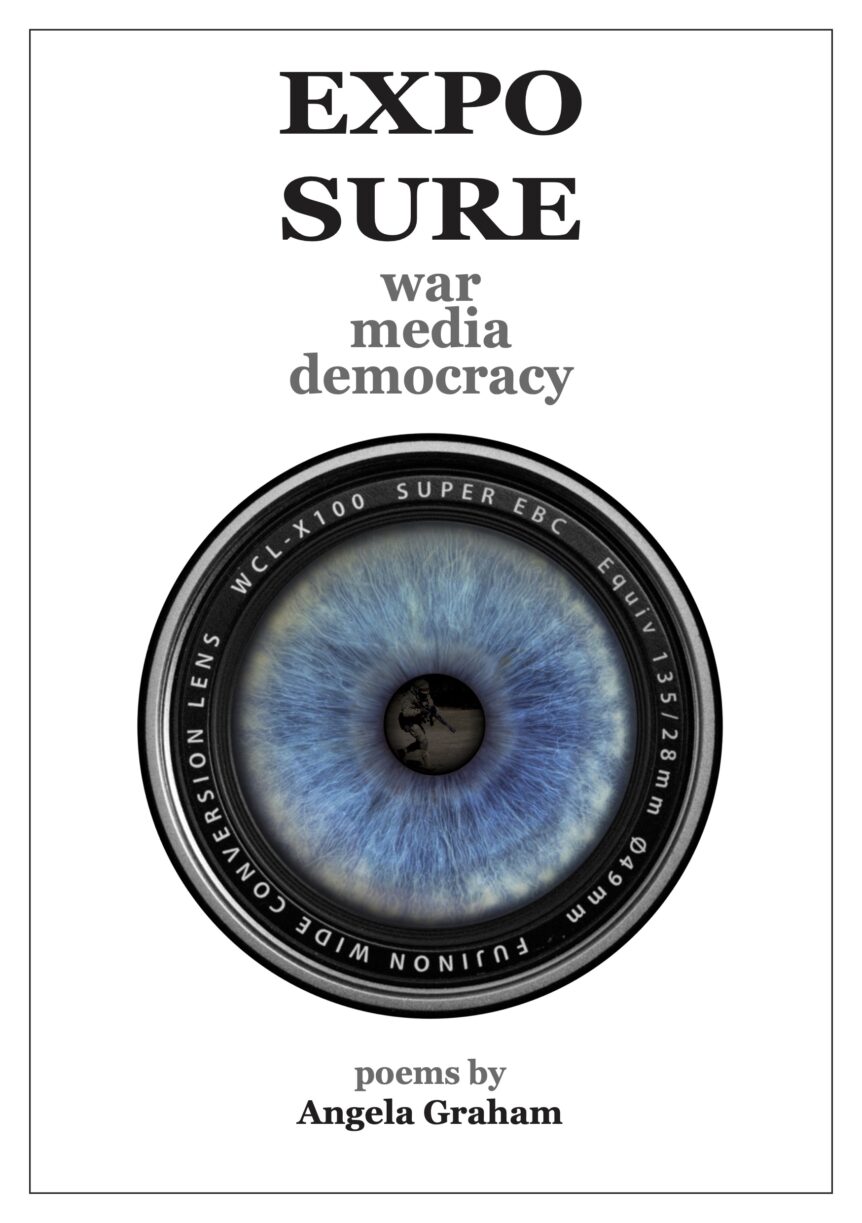
For instance, a poem called, “I Imagine Being Oleh Bondarenko”. This is a Ukrainian man who was the focus of a report in “The Observer” of 1st May 2022. The three journalists credited did a fantastic job of conveying his experience of being brutalised by Russian veterans of the Syria Campaign and gave the reader the context. There were no photographs of the events. Words alone did the job so well that I could imagine the scenes, and from those imagined scenes I speak, as him. I also include some of his words verbatim. Several of the poems have this mix of verbatim reporting and imagined content.
If you do your work well as a journalist, it should make the reader feel that they know the person whose experience is being shared. And a good poem should do that as well.
I’m delighted that Sam McBride, Northern Ireland Editor of “The Belfast Telegraph” will be doing an event with me in September for Ulster University and the John Hewitt Society called “Truth Be Told”. It will focus on this shared capacity of journalism and poetry to do just that.
If you would like to see more of Angela Graham’s work go to the link below


