How did the Neon Saints project come about?
Larry Cowan
Initially I talked to Josh Schultz, Community Arts Partnership’s Development Manager, regarding the possibility of producing a short film working with young people. We thought we could use a film-making project to look at issues in the community, maybe make it slightly environmental, slightly educational.
Then Josh Schultz and Conor Shields, Community Arts Partnerships’ CEO, discussed the possibilities and came back to us with a suggestion. They wanted us to work with young people and to keep the project community based.
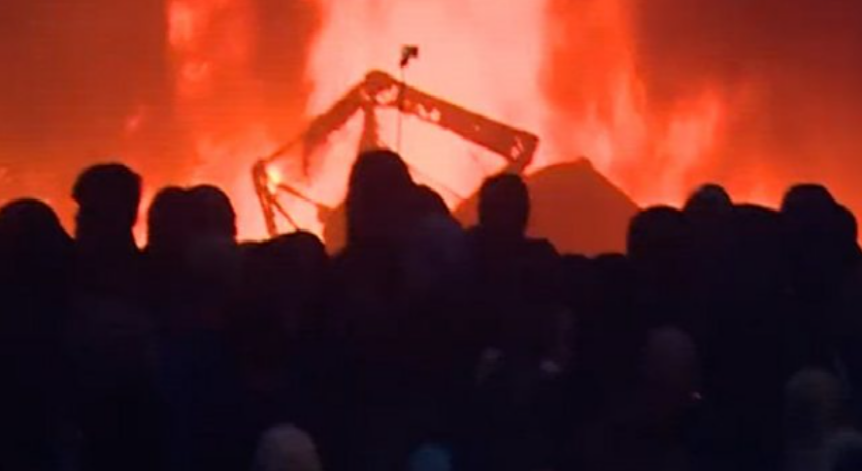
At the time there was real problems in Ballymena with people attacking the Roma people who lived there, stirring up racism, and we were actually working with people from the Roma community at the time. The impact of those racist attacks reverberated throughout Northern Ireland.
So basically we thought we would get a group of young people together and see what they thought about the key issues in their community, not just about racism although that would be something that could be addressed and we would go from there.
How did the project progress?
Larry Cowan
The project’s aim was to work on a story which was interesting to the young people, give them a voice to look at issues in their community, something that was affecting them, and in the process there was going to be a learning element built into the programme both in terms of scriptwriting and learning about film-making.
We didn’t want to direct the young people to address specific issues and we did want the question of the environment to be in the mix in subtle ways. We had a quite a wide interpretation of that word: it could be the environment in which you live, the environment which surrounds you, and of course the environment and the question of climate change. We were also using climate friendly methods to produce the film.
We should say here that Lamb Films has been working on these types of projects for almost 15 years, using film to explore issues between communities, between different ethnic groups, immigrants, asylum seekers and between generations. We did the film education/training with the Belfast Film Academy, so we did have a lot of experience from our previous work to bring to this particular project.
Where did you find the young people to work with?
Thomas Pollock
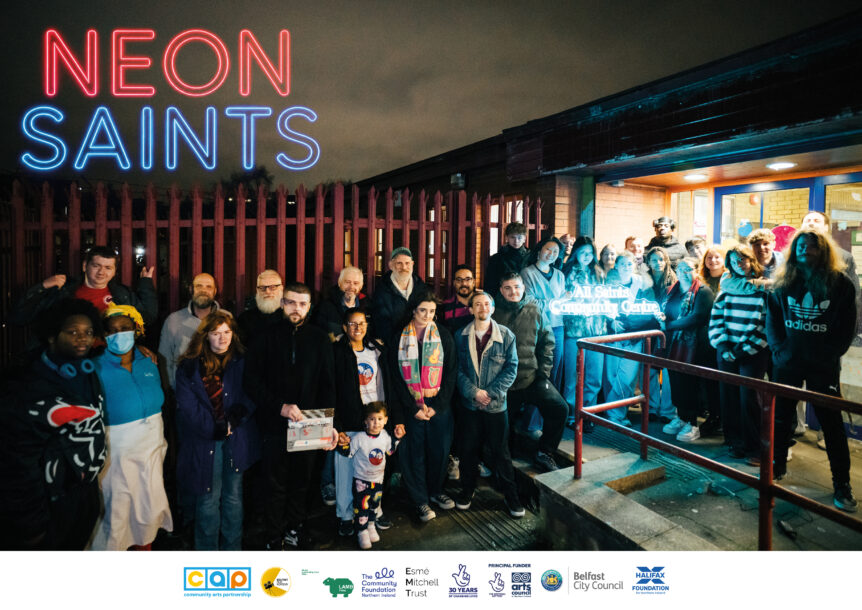
We put out a call-out through Facebook and through Community Arts Partnership’s communication platforms and their contacts. We visited schools and talked to people we knew in the Roma community. We approached friends who had children as well and we ended up with a very diverse group of young people, about 18 altogether.
Once we had a good mix of young people, we recruited the writers, Tony McCauley and Pamela Brown, to work as story facilitators.
We met every Monday for nearly 6 months and when we started filming we met every Monday and Thursday. It was quite a big commitment for the young people and I think there were about 10 to 12 who were fully committed and others who attended various workshops and activities.
What did you get the participants to do?
The participants worked with Tony McCauley and Pamela Brown for 4 weeks on creating a story and the title came out of that, “Neon Saints”, and the story took place at a youth club in a community centre.
When it came to making the short film, we went through pre film visualisation, how to write up a storyboard, how to go about working out where the locations should be, what shots do you need, how do you go about rehearsing. TO produce a short film you need shot lists, floor plans, the storyboard. There really was a lot to learn.
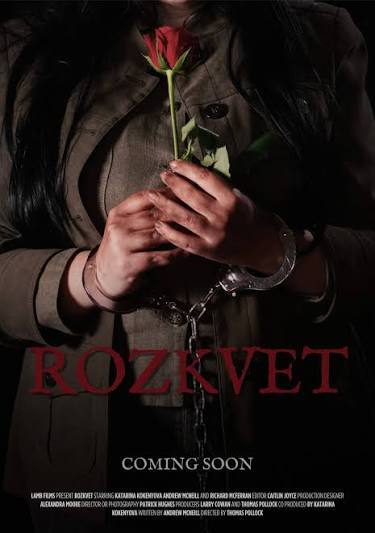
Then we had Andrew McNeil who had acted in Rozkvet, Lamb Films’ independent film about the Roma Community during World War Two, come in and do acting workshops.
So the young people went through quite an intense training programme before it came to shooting the film
Larry Cowan
We did exercises like “Going for a take” and other exercises to show the young people how film-making, contrary to popular opinion, is mostly about setting up properly, about getting all the technical equipment ready, and then the acting side of things takes place.
What was great was the young people themselves came up with the story, learned how to make a film and they weren’t just the crew; they acted in the film as well.
For more information about Lamb Films, see the link below.


