How did the project start?
Andrew McNeill
I came up with this idea years ago. I have always had an interest in history, particularly the Second World War and periods similar to that.
I think it was from knowing Katarina Kokenyova, my partner at the time, who is now my wife, and she was also in the film. I was learning about her family history, her family survived the Holocaust, I started to realise that a lot of this history was unknown. Katarina is from the Roma community and I was learning about the history of the Roma people as well.
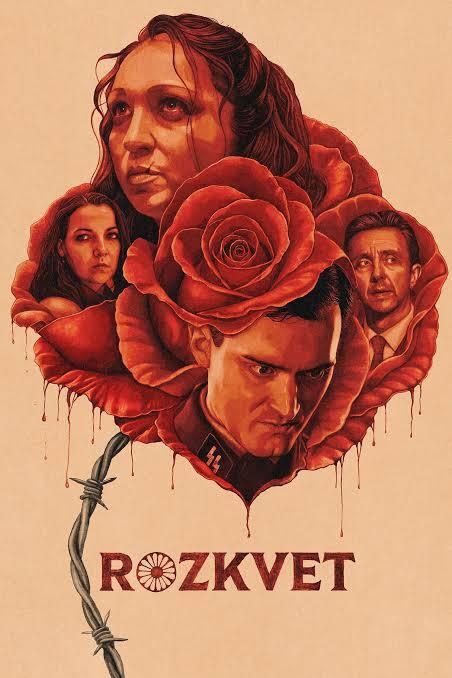
We wanted to explore that history and we started with the idea of Rozkvet. Rozkvet is a Slovak word which means “bloom”, and we started with the idea that resistance fighters in a rural area would use flowers to signal whether or not attacks were going to go ahead. A white rose means that the attack won’t go ahead, a red rose means that the attack would be going ahead.
From there I had an idea about a character which I played in the film, an SS Officer who was a botanist before the war started, and he was familiar with the language of Floriography, the language of flowers. That allowed him to work out how the resistance fighters were communicating with each other.
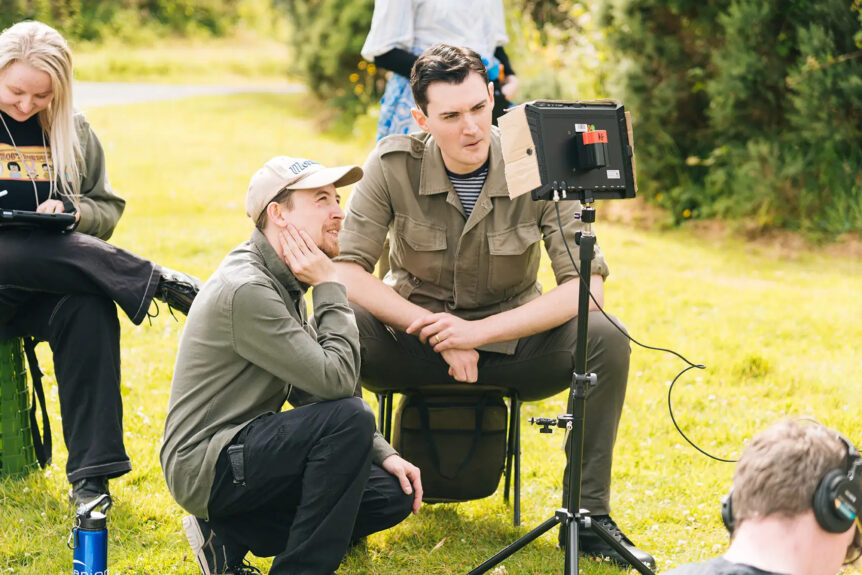
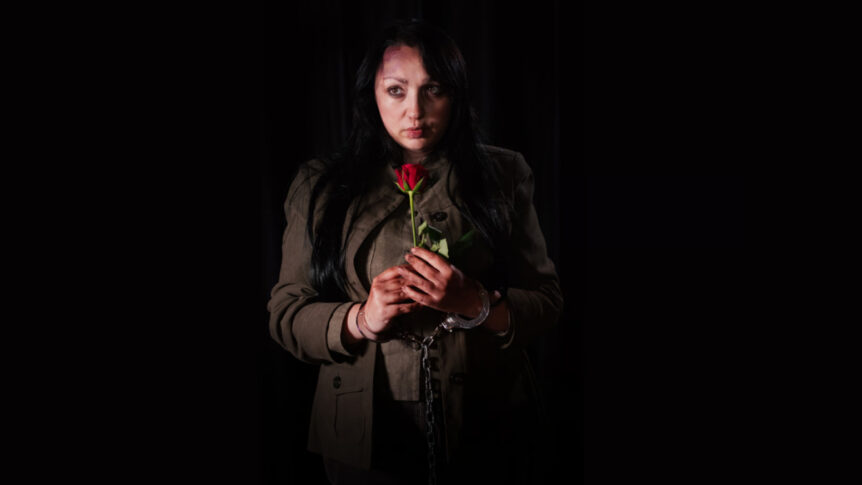
Everything sprung from there and we ended up doing it as a one act play where everything took place in the interrogation room with a table, two chairs and three actors, myself, Katarina and Richard McFerran who played an Italian diplomat who is caught between the two forces.
Then Thomas Pollack and Larry Cowan from Lamb Films came along and saw the play and their idea was to suggest the play be made into a feature film.
Thomas Pollock
I saw the play and I did some promotional work for the play and we recorded the play as well, and we did think it should be expanded. We didn’t quite know how the whole play would be transformed but we certainly thought it was a story worth telling.
Our view was just to go for it. And that was the summer of 2023 and by the end of that year we had a script and we were headed into pre-production.
Andrew McNeill
I just wanted to do it again because we really didn’t get great audiences for the play when we ran it, we only did three or four performances, and I felt the idea deserved another chance. I couldn’t tell you what it was that made me think it could be a film because I was happy with the play which didn’t have a lot of props and it was pretty self-contained. While I was researching the period, I learned about the level of discrimination against the Roma about a concentration camp in the annexed Czech area which was run by Czechs and was a particularly brutal camp.
So a combination of wanting to give the project another chance to reach an audience, the research which suggested that we could develop the characters and the story, for example there is two year between the final two scenes of the play, and we felt we could add to the story between those two years, and add more layers and more characters to the production.
And how did you finance the project?
Thomas Pollock
We crowdfunded this project and there was a bit of self-financing as well.
What about casting and finding locations?
Andrew McNeill
I had factored that in when I was writing the script. I knew we weren’t going to be able to afford Hollywood levels of production so I wrote the script to fit with what we were able to achieve. It was always very character driven and very self-contained. I think it worked well in that we were using guerrilla film making techniques to document a story about resistance guerrilla fighters.
In terms of finding locations, I was very lucky because my mum and dad always took me around Northern Ireland when I was younger so I knew that there were plenty of locations. I knew about the Folk Museum in Cultra, so I knew we could get access to a farmhouse, some cabins, a railway and that we could find a facility for where the interrogation takes place. I had all of that in my mind as I was constructing the script.
How long did it take to pull the cast together?
Thomas Pollock
We put had a fairly wide call-out through Facebook, and we contacted people we knew, and it was UK wide as well. We wanted to give as many people as possible a chance to find out about the film.
Andrew McNeill
We did make use of Spotlight for casting but I am a big believer in open castings because that is where I have been able to get opportunities during my career.
I am very proud of the fact that a lot of the people we ended up working with were from open casting. We looked at everyone and really gave people chances to show us what they could do. We watched everything people sent to us. We made every effort to cast as wide as possible and ensure that there were opportunities to audition.
See more of the work of Lamb Films here: www.lambfilms.com
Follow the work of Andrew McNeill here: uk.linkedin.com/in/andrew-mcneill-874b6a115
Book tickets to see the film Rozkvet here: belfastfilmfestival.org/event/rozkvet


