What about the question of leadership? That seemed to me an issue you address with this collection?
The question of leadership and the behaviour of our leaders, the deficiencies of our leaders, is certainly a question I look at, but I don’t think that is the only thing I want people to take out of the work. I do think that we are all responsible for what happens in some way. We can’t just blame the leadership as if we are not all in this together. We are all in this together.
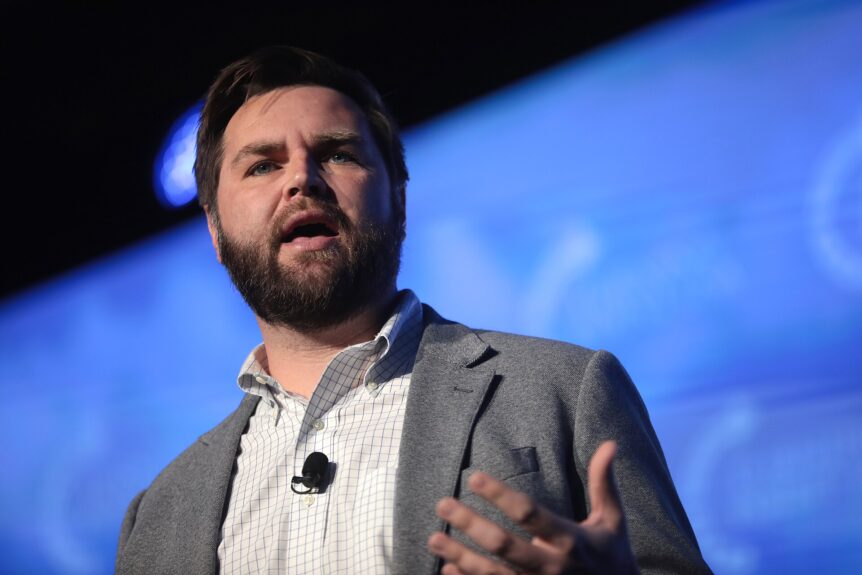
And I do, it is fair to say, look at the behaviour of people like Donald Trump and J.D. Vance; Trump governing by executive order, and Boris Johnson’s and Netanyahu’s behaviour, but the second half of the book is slightly less focused on very particular conflicts, rather it is encouraging the reader to consider how conflict exists within the reader’s own life.
Could you expand on your thoughts about the response you would like the readers to consider?
It is a problem of contemporary life that people feel powerless and are tempted towards cynicism. I would like the readers to think about authority and governance, corruption and democracy, but there is a deliberate shift towards the personal in the final section of the book.
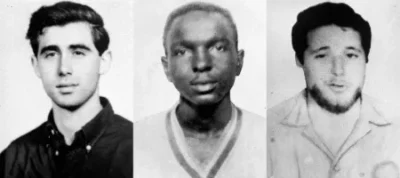
The political is not absent by any means, because I set the scene by starting off with the poem about three individuals campaigning for voter registration in America and they paid for this with their lives, which most of us will hopefully never have to do.
I am setting the stakes, politically, very high at the beginning of this section, and I am also showing a personal cost, in what wasn’t even considered to be a war.
I then move through climate issues, to a section where I personally come into it much more. I write about my mother’s relationship difficulties, and about my health issues, about sitting anxiously in an eye clinic in the National Health Service, thinking, certainly, about the much more awful situations in other countries but also, of course, of people here who are suffering in so many ways. Pain is present and very acute.
My plea is that we recognise how we benefit from organised mutual compassion; that we don’t give up on that, saying there’s nothing we can do. Let’s look at the facts that we are offered through good journalism (the book is a celebration of conscientious journalism in various media), and from there think:
What can we do to change things for the better? What can we do in our personal lives to change the world? What do we have to do to change things?
I would say the question might be, today as I am sitting here now, how can I live in a way which encourages solidarity?
I would like people to think about that. Regardless of the situation they might find themselves in, even if they find themselves struck by illness, even if they are lying in bed ill, how can we find a way to help change things, to help encourage solidarity? Even an apparently tiny act tilts the balance. And if someone were to say, what good is a tiny act or a word of encouragement, or maybe it can only be a compassionate thought, I would always ask who benefits from crying down these “small” things? In whose interests is it to tell us that they don’t matter? Who wants us to feel that unless we can do “big” things we are losers?
So what’s the link between the very huge problems we have in society – healthcare, housing, jobs, domestic politics – and people’s personal situations and capacities?
If through this work you wish people to reflect on what they can do, is this the kind of book which should be more than something people just pick up and read?
I’ve tried my best to write a book which is prompting these questions about individual responsibility and our commitment to the collective. To some extent that is the poet’s job – the presentation of images, the prompting of connections, the offering of opportunities to see, and to reflect. As one poem suggests, there is a seed planted in a poem which might flower in unexpected ways within the reader.
The poet has no right to dictate what those ways might be. I don’t have a plan of campaign for the book, but I do hope that it encourages people to think through these huge questions which confront everyone.
Where to now?
I like reading my poems to people and I think that I do that well so I am hoping to get opportunities to do that. I do want this work to build an audience, and I would like to read, to perform, my poems to that audience. There is always a limit to what myself and my publisher can do to get my work into the hands of people who might run with it.
I am also working on a new book, a book I have been writing all of my life, poetry and prose about my own family. I have a grant from the Arts Council and I have to finish that project this year.
If you would like to see more of Angela Graham’s work go to the link below


