How do you get into poetry?
I don’t remember not being into poetry. I wrote a poem for the first time when I was 6 years old, and once you start so early, you don’t analyse it, it is just part of your life. It’s just something that you do.
Did you get support at home or at school?
I was writing poetry at home. My parents were not educated people but they had great respect for learning and for culture although they could never afford to take part in public culture. There was no going to the theatre and there were very few trips to the cinema. We didn’t own many books, perhaps we had two books, and there wasn’t money for buying hooks. There was a public library and because my parents were readers and we would get books from there.
My mother was a secretary and because I was coming up to her with these poems I had written, she would type them out. She made them look like they were poems in a book and an interesting thing that she did was, that she sent one of the poems, when I was 7, to a weekly magazine in Ireland and it was published.
The editor of the magazine asked for proof of my age, because you had to be 8 years old to be published, and my headmistress, who was very strict and very moral, lied and said that I was 8 years old.
That stayed with for me for a long time because I couldn’t understand why someone would lie about my age, would lie in print to help me get a poem published. When it came out in the magazine it said that the authenticity of the poem was vouched for in the usual way and I didn’t understand what vouched meant. I had to look that word up in the dictionary.
What about secondary school. Did you write much during that period?
I was very lucky because I had an excellent English teacher in secondary school. She had us read material and then we had to write in the form of the material we were reading, so if we read a sonnet, we had to write a sonnet, or if we read a short story, we had to write a short story.
That I think was quite unusual at that time because I think she wanted us to be, not only readers but writers as well. That made it the norm to write in school. That was very encouraging for a child who was instinctively drawn to words.
I can distinctly remember when I was about 14, she was marking my work and she didn’t like something I had written in a poem, and I had to defend my choice of words. That approach helped develop the practise of critical writing. I had to have reasons for the choice of one word over another?
Do you go on study literature at university?
I studied an English Language and Literature Degree at University and I always kept writing and reading. I was interested in structure and technique, and I have a great respect for the craft of writing. Basically I just kept doing it, reading, I am a very fast reader, and writing. I don’t write quickly and so here are many drafts of my poems before they are completed.
Any other processes you use to develop your craft?
In the last few years I have started discussing my work with two other poets, using email, and I think that is very useful. We are sharing work twice a week, critiquing each other’s work. Seeing drafts, multiple drafts, of someone else’s work, can be very helpful, makes one very aware of what the process taking place in another writer’s head is. You can see the writer reflecting back on their own work and that helps me reflect back on my own work.
It is also makes you examine what you are trying to convey through your work. I often find that what I thought was quite clear, might not be clear at all to someone else. And that process has been invaluable.
And punctuation! The nuances of punctuation matter in poetry. Working closely in this way shows up, time and again, how meaning goes astray if it isn’t underpinned by punctuation and the other technicalities, such as italicisation and the placing of line-ends. Good craft aids meaning. I never stop seeing things I see that I could have done more accurately.
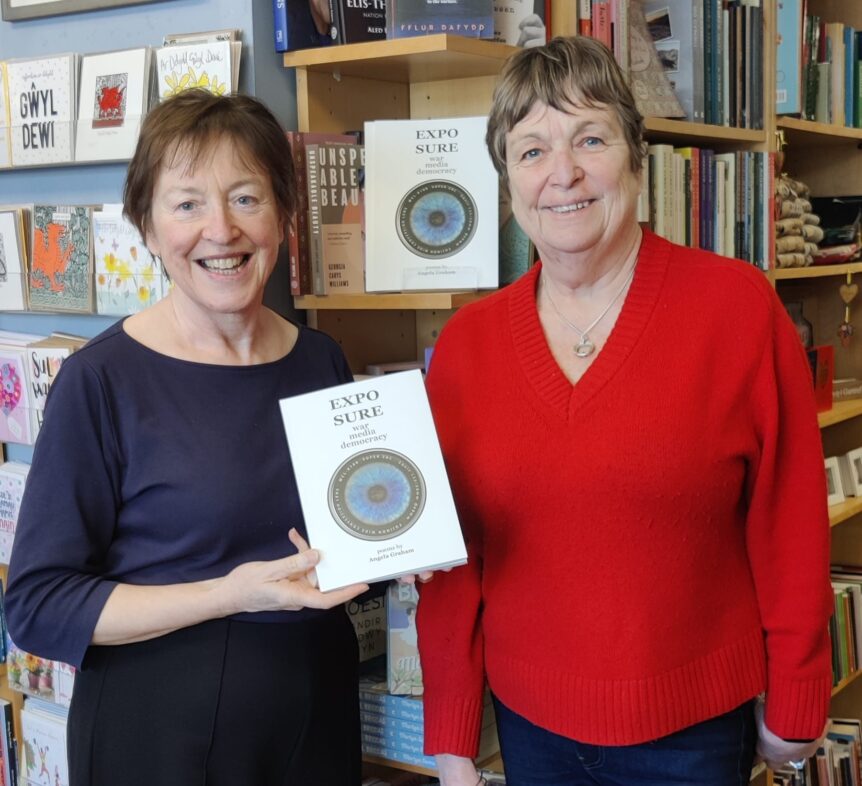
If you would like to see more of Angela Graham’s work go to the link below


