How did the project “Exposure” start?
I saw a photograph in a newspaper on the first anniversary of the Russian invasion of Ukraine, and it caught my attention so powerfully that I chose to stay with it, and that is what I did. There was a sense in which I was involved in contemplation regarding this image.
The photograph was so striking that I felt I was being invited to “enter” it. (There is a poem in the collection specifically about the act of “entering a photograph”). It was captioned as being on the outskirts of Kharkiv, taken on the war’s third day, 26th February 2022. It showed a destroyed Russian military vehicle, a dead Russian soldier lying on his back alongside it. White snow covered everything, in a featureless setting, but it was melting in patches, revealing his dull green camouflage. Some commercial storage sheds were just visible in the top right corner – a detail of chilling banality.
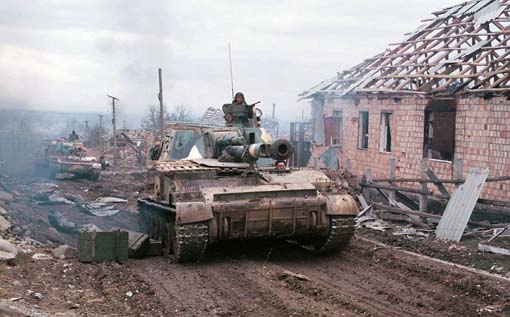
There was a sense, a feeling, that I had to ask myself what this photograph was trying to tell me about life in general, about the life of the person in the picture and about my life as well. At that point, there was a dialogue taking place, as often happens with good photographs (and with paintings) about the situation regarding this image.
How was it taken? How does it impact me? Am I reading too much into the photograph? Am I placing myself too much inside the photograph, in terms of interpreting the photograph? If the photograph is communicating with me, what is its meaning?Is it wrong to expect “meaning”?
I certainly felt there was an exchange going on between myself and the photograph and I have always been interested in that process of exchange between myself and images of various kinds.
There were retrospectives being produced about the war, in the papers, in media generally, on television. You would get blocks of photographs – disturbing images. I noticed that the name of the photographer who’d taken that photograph that first caught my attention kept cropping up: Sergei Bobok, so I started to look at more of his work.
I soon realised that many photographers had “covered” this scene, at different times on different days. And each photograph, subtly different, was telling a slightly different story.
The book came out of that experience.
And that leads to the first poem in the book?
I saw the photograph, as I said, by Sergei Bobok, and then the poems follow my journey through the newspapers and the online coverage. Eventually I found a photograph that was taken before the snow fell. It had a completely different atmosphere from all the others. I began to get a sense of the timeline of this death. This Russian died on the afternoon of the 22nd. I found out that the snow reached Kharkiv at eight the following morning which meant that by the time the snow fell, the body had lain there for many hours.
It was a local Ukrainian photographer on the spot, Maksim Levin, who took the earliest shot, before the weather closed in. Snow changes everything – especially the light (so crucial to photography) and blots out detail, monumentalises. Photograph by photograph I built up an understanding of how the war had “arrived” at this mundane scrap of land by the ring road outside Kharkhiv and I followed Maksim Levin’s personal story.
I found there was a whole photographic catalogue, if you like, of imagistic facts over the first 4 or 5 days of the invasion which also documented how that situation changed over that period of time. There were these photographic facts, but then how to interpret them? These facts were presented in various media outlets but I became increasingly aware of what was left in or left out of each one.
How does the collection then take shape?
The collection is carefully structured because I realised that by the time you get to the end the reader will have covered a lot of ground and I didn’t want it to be a confusing experience.
The first section: “Soldiers and Civilians” is about the Russian invasion of Ukraine and the Israel-Gaza conflict. The second half of the book: “Citizens and Politicians” is based primarily in the UK and the US. Yes, neither of these countries is experiencing a war on home ground but there is plenty of conflict within democracies. The seeds of war are everywhere.
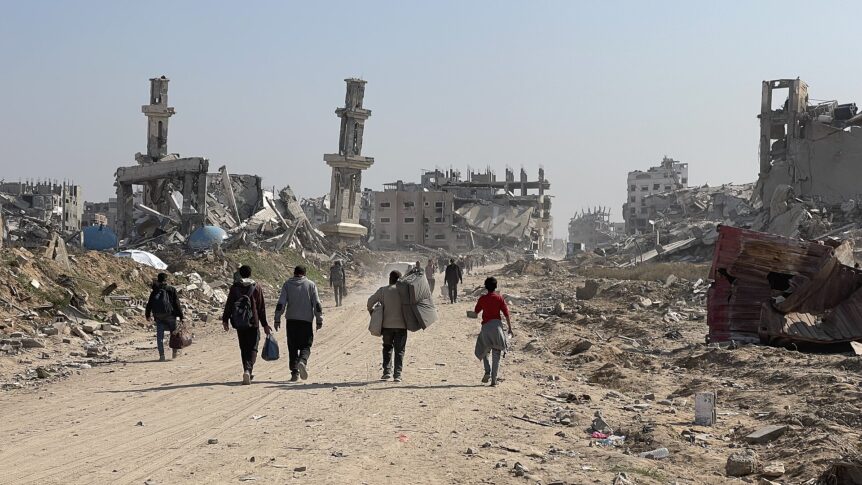
The focus in this half is not as tight as in the first but the role of the media and of journalism continues at the forefront as they mediate to us experiences of, and views on, crises such as Climate Change and the manipulation of democratic processes – of “Assaults On Democracy”, as one poem is entitled..
I would add here that if a reader thinks that wars take place in strange, foreign, faraway places, and that is where these terrible things occur, but “They would never happen here, we don’t behave like that.” my experience of “The Troubles” convinces me that anyone, in any country, can end up doing terrible things and that none of us can be free from the virus, the potential, to resort to violence, even war. The side of us, of humanity, which is selfish, violent, is always being appealed to. But the book bends towards strategies of resistance and hope.
If you would like to see more of Angela Graham’s work go to the link below


