Why is the ‘Lucia Dances’ project enhanced by being performed in an immersive art environment?
For the “Lucia Dances” project, we have been working with a series of images which hopefully are like the images people see in their dreams, or in a heightened state of being, or might see because they are schizophrenic or psychotic.
We really don’t know what goes on in other people’s heads, but in a sense, we wanted to create the idea of what might be going on in Lucia’s head. In fact at the very beginning I approached mental health organisations with the idea of involving people with lived experience of mental health difficulties and professional practitioners, and this is a path that I would still like to explore.
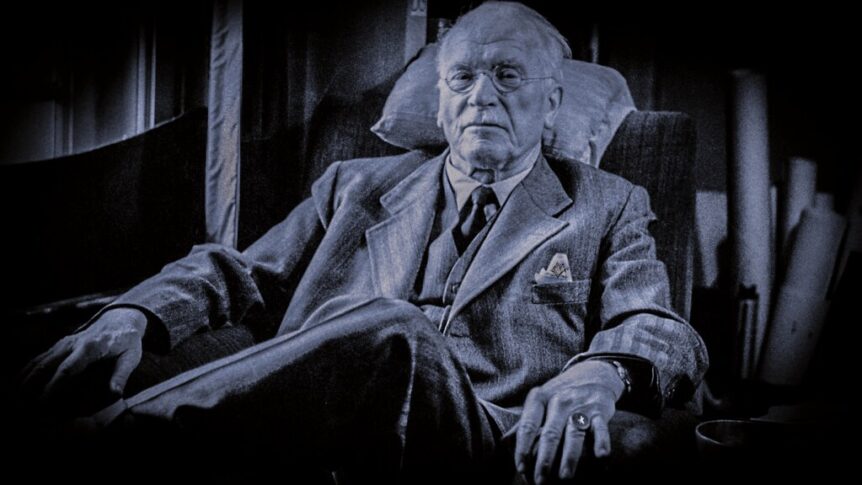
When we showcased the work at the Armagh Planetarium, the voices of James Joyce, Carl Jung and others that Lucia might have known were heard in surround sound from various parts of the dome, prompting us to ask whether Lucia is ‘hearing voices’ or, combined with the projected images, simply remembering incidents in her life. We couldn’t do that in quite the same way at the Ulster University showcase because we used flat LED screens and stereophonic sound through only two speakers.
I think another way to perform the piece would be to involve live actors to perform the various parts, but I don’t think that this approach would be as powerful.
It does sound like the Lucia project could be offered in a number of different ways?
I think from what I have seen, the potential to develop the project is best realised in full domes, as they offer perhaps the best opportunity to create immersive experiences; but yes, you are right, this project has many other possibilities resting within it.
It could be performed as a theatre piece; it could be used to investigate the question of mental health, and it could be used to generate well-being in a community setting and perhaps as an educational project as well.
You seem to see the Full Dome as another instrument to help create your work, as well as creating a particular type of environment?
I certainly see it as another instrument to add to the potential to be innovative and creative and offer an audience a unique experience of the production of “Lucia Dances”. Regarding a relaxed, more receptive experience or a healing or restorative experience, I believe that warrants and urgently needs really solid research investigation.
Future Screens NI were very generous in giving me a proof of concept grant in 2025 and we used that to investigate and develop the project. We haven’t, to date, been able to perform in a Full Dome, with the dancer fully immersed in the visuals, but, as I said earlier, we did manage to showcase the work at the Planetarium in Armagh and at Ulster University Visual Production Studio, with illuminating results and valuable feedback.
Those showcases demonstrated the feasibility of producing a reasonable length 360° film configured for screening in domes around the world. It would be immersive in that the audience would be sitting in the middle of the film, but for me it wouldn’t have the crucial element of being a live performance.

Are there drawbacks using immersive technology?
There is an inherent problem with the domes I have encountered, because for film they really don’t offer a full 360° view. It is a fair bit less than that, more like 180°. That to me is a drawback, but do we know that we could produce a film to be experienced in either 180° or 360°, But after everything I have investigated, I have come to the conclusion that full domes have the potential to create unique theatre productions, and we are still pursuing this with our production of “Lucia Dances”.
Have you seen any immersive events which have worked well?
I did see an exhibition by David Hockney in London which was truly immersive. David took us on a wonderful art history journey through his own work and that of some of the great masters. Through this, he was able to cogently illustrate his theme that human sight is mobile, psychological, and time-based, whereas photography sees everything geometrically from a fixed point in a single click: essentially challenging the concept of Western linear perspective.
Applied to the Lucia project it raises the question of how an audience will respond and interact with live action within a sonic soundscape and 360° visuals.
If you would like to see more of Alistair Livingstone’s work go to the following links


